Program: #26-09🏆 Air Date: Feb 23, 2026
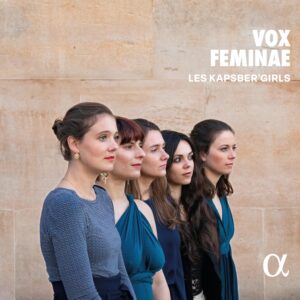
Rolf Lislevand, who we heard recently on the program, has produced recordings from this new group of young women with a witty name; their third recording gives us women composers of the early Italian Baroque.
NOTE: All of the music on this program comes from the Ensemble Les Kapsber'girls directed by Albany Imbs. The recording is on the Alpha Classics label and is Alpha 1098.
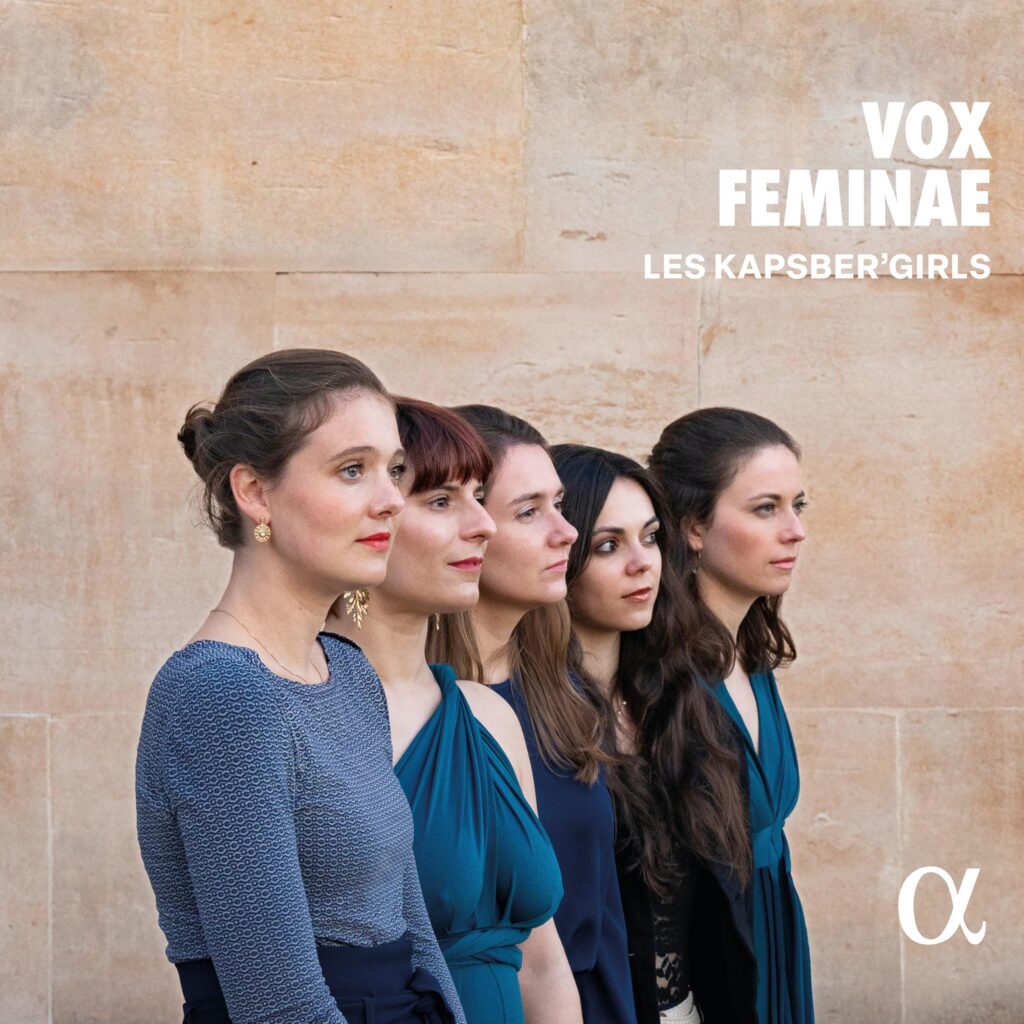
After their explorations of Italian repertoire in Che fai tù? (MU-037) and French in Vous avez dit brunettes? (Alpha 761), Les Kapsber'girls, a vocal and instrumental ensemble founded by lutenist Albane Imbs in 2015, devotes its third album to Baroque women composers: hidden talents, unrevealed destinies, few of these composers have had the opportunity to reveal their art, which is nevertheless very real. Recent research has made it possible to revive the fascinating works of composers such as Barbara Strozzi (1619-1677), Isabella Leonarda (1620-1704), Lucia Quinciani (1566-1611), Francesca Caccini (1587-1641), Antonia Bembo (c.1643-1715), and Francesca Campana (c.1615-c.1665), who spent sixty-nine years of her life in an Ursuline convent in Novara, although this did not prevent her from composing no fewer than two hundred works!
With this program, Les Kapsber’girls paint a musical portrait of five Italian women composers of the 17th century, whose works, long marginalized, are nonetheless deserving of recognition and prominence. The concert is structured as a biographical and emotional journey, alternating vocal pieces (cantatas, villanelles, arias), instrumental works, and narratives about these women’s lives.
The music of Francesca Caccini, the first woman to compose an opera, sits alongside the intimate and sensual works of Barbara Strozzi, the elegant villanelles of Francesca Campana, the dramatic cantatas of Antonia Bembo, and the spiritual rigor of Isabella Leonarda.
Each selected piece reflects a facet of their journey — their relationship to power, to love, to religion, or to creation.
From Early Music America: Founded in 2015, Les Kapsber’girls take their punning name from the composer and lutenist Hieronymus Kapsberger (1580-1615). While the French vocal and instrumental ensemble, led by lutenist Albane Imbs, paid tribute to their namesake on their first album (2020’s Che fai tù?), they have not since confined themselves just to his output but have instead explored a wide range of repertory from across the 17th and 18th centuries. On this, their third and latest album, the ensemble both returns to their Kapsbergerian roots and expands outward to new territory: his female contemporaries. As they explain in their brief liner notes, this intentional shift is meant to highlight the women whose works were fortunate enough to be preserved in some fashion (a rarer incidence than for the more numerous male composers of the day), as well as to supplement and support the scholarly work being done to bring these women and their works to light.
To that end, Vox Feminae presents an array of vocal works by Italian women composers from all walks of life and levels of fame. The album begins with Barbara Strozzi’s duet “Mercè di voi” — an apt choice, given that it also opens Strozzi’s first book of madrigals, and its line about flying “among the blessed choirs, crowned with laurels of immortality” gestures poetically to the other female composers represented here, especially the lesser-known Francesca Campana and Lucia Quinciani. Works by Antonia Bembo, Isabella Leonarda, and Francesca Caccini round out the album, with instrumental pieces by Kapsberger and Ercole Pasquini interspersed throughout.
The program is well conceived and well designed; there’s a nice contrast in style and affect among the vocal works, while the instrumental ensemble provides an excellent sense of continuity throughout. But the instrumental works are hardly filler: the pizzicato dances, in fact, are a highlight of the recording, especially given the inclusion of the triple harp. The acoustic suits the gentler instrumental works beautifully; all registers and timbres are so clearly audible that it makes you feel like you’re standing inside the ensemble itself. And the opening to Bembo’s “In amor ci vuol ardir” is vivacious, rich, and fun, with the vocalists lending the entire work a really engaging sense of live-ness.
It certainly seems to depict the sense of screwing one’s courage to the sticking point signaled in the text. Leonarda’s textual call to arms in “Ad arma, o spiritus” is mimicked musically to great effect here. Strozzi’s “Che si può fare?” is a real standout for its lovely sense of pathos, which is also on display in Bembo’s “Habbi pietà di me” and particularly in the sensitive deployment of trills in Quinciani’s “Udite lagrimosi spiriti d’Auverno.” The piece I found myself returning to was Caccini’s “Ch’amor sio nudo”—the vocal runs here were splendidly coy and inviting. It’s an interesting choice to end on Kapsberger’s “Gagliarda sesta,” instead of a rousing vocal number, but it might just make you put the album on again to hear the voices return in the opening Strozzi.
The ensemble has already won several prestigious awards, as well as international acclaim at festivals and concerts alike, and, on this recording, it’s easy to see why. I look forward to hearing more from them in the future.
- Il Primo Libro de Madrigali, a due, tre, quattro, e cinque voce: Sonetto. Proemio dell’opera
05:45 - In amor ci vuol ardir
01:46 - Amor mio, facciam la pace
04:29 - Corrente quinta
01:18 - Il Primo Libro de Madrigali, a due, tre, quattro, e cinque voce: Canto di bella bocca
04:57 - Corrente quarta
01:21 - Ad arma, o spiritus
07:36 - Che si può fare?
08:58 - Voi luci altere
03:24 - Gagliarda quarta
01:02 - Primo Libro delle Musiche: Ch’amor sio nudo
02:39 - Ballo secondo
01:19 - Fanciulla vezzosa
01:55 - Corrente prima
01:26 - Habbi pietà di me
04:22 - Ballo terzo
01:19 - Amor se questa sera
02:36 - Toccata prima
03:04 - Udite lagrimosi spiriti d’Auverno
01:42 - Gagliarda sesta
01:25