Program: #26-22🏆 Air Date: May 25, 2026
Recent recordings including a mass for the birth of Louis XIV, 17th century works featuring the Ensemble Correspondances, and Arcadian Dreams with Les Délices.
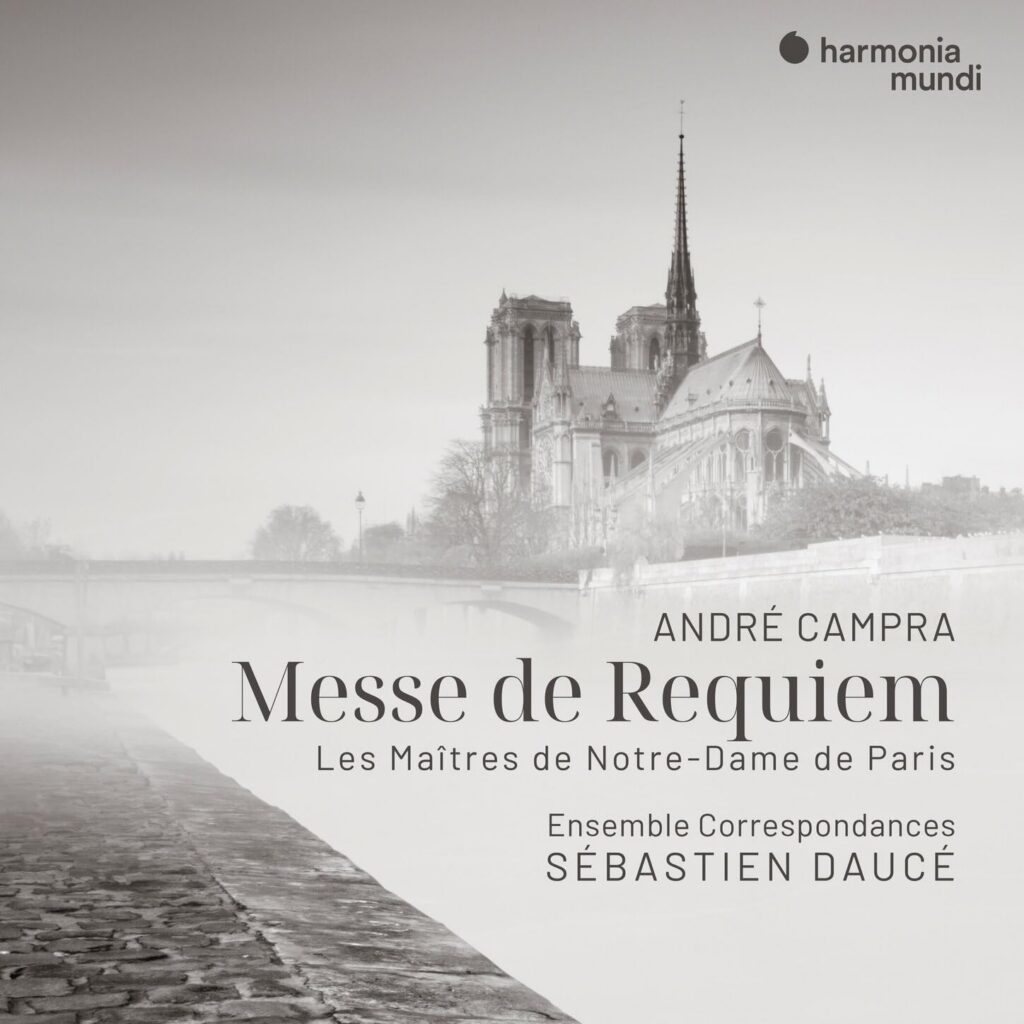
I. André Campra: Messe de Requiem. (Ensemble Correspondances/Sébastien Daucé). Harmonia Mundi HMM 902679.
Missa Sex Vocum “Domine Salvum Fac Regem”
Composed By – François Cosset
- I. Kyrie 2:28
- II. Gloria 4:18
- Ave Verum Corpus 2:17
Composed By – Jean Veillot
- Procul Maligni Cædite Spiritus 1:09
Composed By – Jean Mignon (2)
Missa Sex Vocum “Domine Salvum Fac Regem”
Composed By – François Cosset
- III. Sanctus 2:54
- IV. Agnus Dei 2:29
- Domine Salvum Fac Regem 1:23
Composed By – Jean Veillot
-
Christe Redemptor Omnium 7:45
Composed By – Pierre Robert (3) -
Plain-chant : Templi Sacratas 2:07
Composed By – Pierre Robert (3)
Messe de Requiem
I. Introitus
- Requiem Æternam 2:11
- Te Decet Hymnus Deus 3:19
II. Kyrie
- Kyrie Eleison 3:42
III. Graduale
- Requiem Æternam 5:44
IV. Offertorium
- Domine, Jesu Christe 3:50
- Sed Signifer Sanctus Michael 2:26
- Hostias Et Preces Tibi 2:41
V. Sanctus
- Sanctus 2:58
VI. Agnus Dei
- Agnus Dei 5:32
VII. Communio
- Lux Æterna 1:45
- Requiem Æternam 2:02
- Et Lux Perpetua 3:21
- Tristis Est Anima Mea 3:24
Composed By – Pierre Robert (3)
II. French Connections. (Jonathan Rhodes Lee, harpsichord). Navona NV6389.
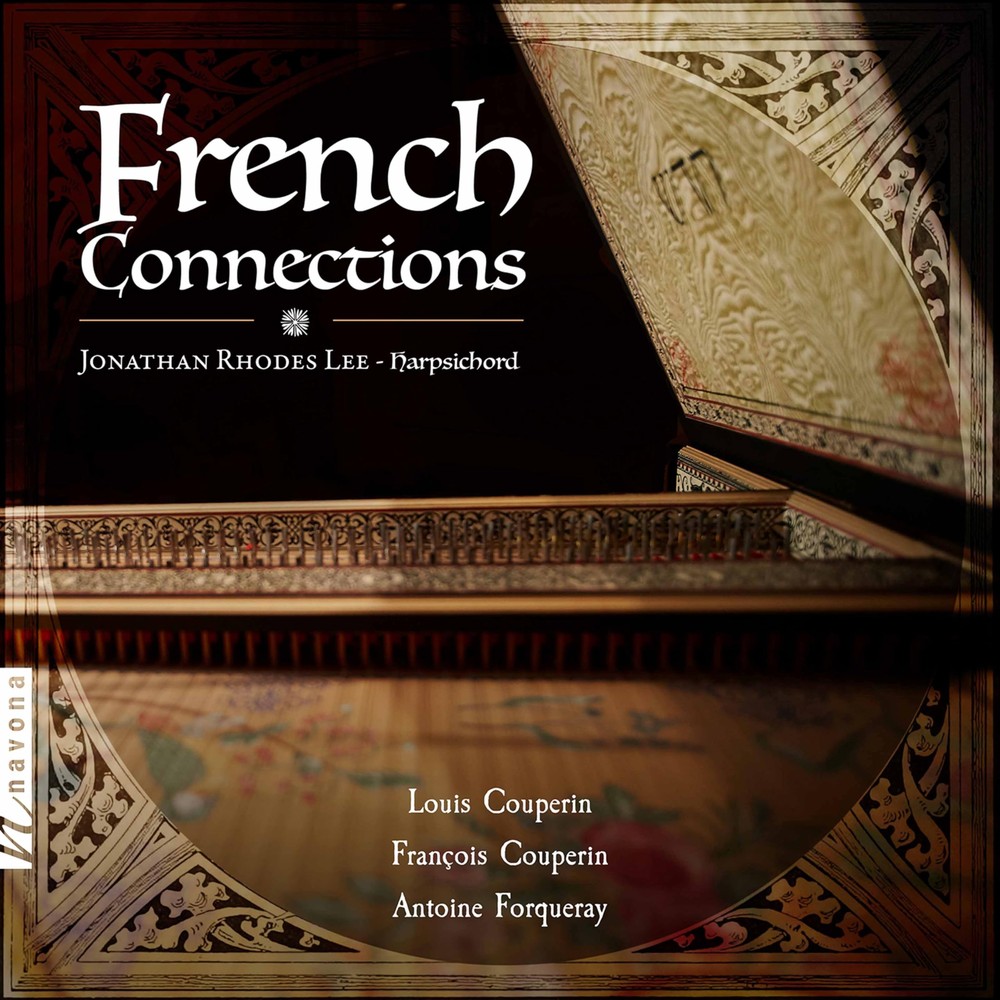
Navona Records presents FRENCH CONNECTIONS, a new album of French works for harpsichord performed by Jonathan Rhodes Lee. The pieces selected for this collection celebrate the small, tight-knit pantheon of 17th-century French harpsichordists who helped shape the instrument’s repertoire. While the total output of these composers would make for countless hours of listening, FRENCH CONNECTIONS offers a taste of this expansive body of work. Music by Louis Couperin (c. 1626-1661), François Couperin (1668-1733) and Antoine Forqueray (1672-1745) comes alive through masterful performances by Lee, with recordings engineered and mastered by multiple GRAMMY-winning classical music producer Brad Michel.
From Gapplegate: If you want to bring a smile to my face, send me some music from the French Baroque. As I remarked on my FB wall the other day, at its best there is a sweetness, a kind of Romanticism of its own, that sets it all as a thing apart in ways that differ from any other period and style. So happily the other day the mailman brought such a release, an album of harpsichord music done beautifully and meticulously by Jonathan Rhodes Lee, the program entitled French Connections (Navona Records NV6389).
The combination of nicely chosen works and committed performances makes this one a happy go of things. I have heard most all of this music in other versions, but I must say that the sequence here seems especially inspired, a great introduction for those that do not know much of this but then also a nicely put-together selection even for those well versed in it.
The program consists of three series of interconnected works--Louis Couperin's "Pieces in F," Francois Couperin's "17th ordre,"from "Troisieme Livre de pieces de clavecin," and finally Antoine Forqueray's "Selections from suite no. 5" as arranged for solo harpsichord by Jean Baptiste Forqueray. I know these latter pieces in their original scoring for solo viol, and so I am glad to hear them in this way.
The idea of putting together a series of dance music pieces into a suite is most admirably exemplified by the Louis Couperin "Suite." His nephew Francois follows with a suite where nicknames are in part the orienting principal. Finally we get Fouqueray's Suite selection where the virtuoso element is more toward the forefront.
Well now I must say in conclusion that this all constitutes a delightful set of works played with both care and zeal. French Baroque harpsichord styles come though with clarity and concentrated zest. I thoroughly recommend this music! Molto bravo!
| Title | Composer | Length | |
|---|---|---|---|
| 01 | Pieces in F: Prélude | Louis Couperin | 2:42 |
| 02 | Pieces in F: Allemande Grave | Louis Couperin | 3:55 |
| 03 | Pieces in F: Courante | Louis Couperin | 1:31 |
| 04 | Pieces in F: Branle De Basque | Louis Couperin | 0:41 |
| 05 | Pieces in F: Chaconne | Louis Couperin | 3:11 |
| 06 | 17th ordre: La Superbe, Ou La Forqueray | François Couperin | 5:14 |
| 07 | 17th ordre: Les Petits Moulins À Vent | François Couperin | 2:04 |
| 08 | 17th ordre: Les Timbres | François Couperin | 3:02 |
| 09 | 17th ordre: Courante | François Couperin | 2:43 |
| 10 | 17th ordre: Les Petites Chrémiéres De Bagnolet | François Couperin | 2:09 |
| 11 | Selections from Suite no. 5: La Rameau | Antoine Forqueray, arr. Jean-Baptiste Forqueray | 4:47 |
| 12 | Selections from Suite no. 5: La Boisson | Antoine Forqueray, arr. Jean-Baptiste Forqueray | 5:17 |
| 13 | Selections from Suite no. 5: La Sylva | Antoine Forqueray, arr. Jean-Baptiste Forqueray | 6:10 |
| 14 | Selections from Suite no. 5: Jupiter | Antoine Forqueray, arr. Jean-Baptiste Forqueray | 7:42 |
III. Arcadian Dreams (Les Délices/Hannah de Priest, s./Debra Nagy). Avie AV2831.
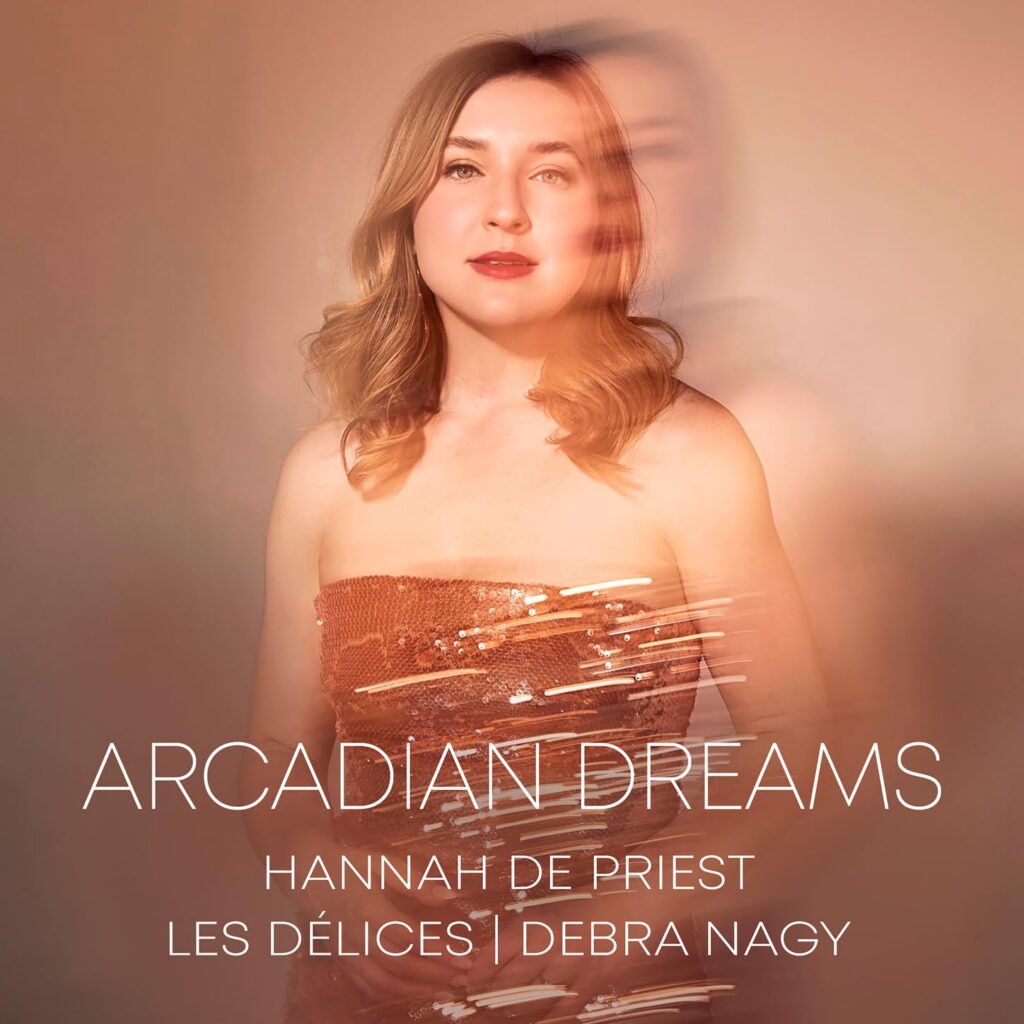
Arcadian Dreams: the title conjures pastoral perfection; an idyllic vision rooted in Greek mythology. Equally, it references the Arcadian Academy established in Rome in 1690, a vibrant hub of intellectual and artistic creativity whose influence quickly spread across Europe.
Arcadian Dreams assembles an exquisite group of composers – both esteemed and inspired – including the French luminaries Thomas-Louis Bourgeois, Louis Antoine Lefebvre, and Jean-Philippe Rameau; the Neapolitan maestro Domenico Scarlatti, who lived his last 35 years in Spain; and the German-born George Frideric Handel, whose early Italian career left an indelible mark on his masterpieces.
The enchanting realm of Arcadian Dreams abounds with gods and goddesses, shepherds and nymphs, and bucolic dreamscapes creating an aural tapestry of pictorial, secular cantatas intertwined with entrancing instrumental numbers. The fearless young soprano Hannah De Priest, making her recording debut, vividly captures the essence of these beguiling works, alongside the entrepreneurial early music ensemble Les Délices whose members bring long-forgotten music alive for contemporary audiences.
From Early Music America: In a splendid new recording from Cleveland-based period-instrument ensemble Les Délices and headlined by soprano Hannah De Priest — making her solo recording debut — Arcadian Dreams refers both to the 18th-century concept of Arcadia as “a kind of pastoral perfection; an idealized vision where nature and humanity hung in perfect balance,” and Rome’s Arcadian Academy, founded in 1690, “an intellectual home for poets, visual artists, and musicians who dedicated themselves to aesthetic values like truth and simplicity inspired by Classical form and function.” Indeed, the repertoire of Arcadian Dreams holds deep pastoral truths, with four solo secular cantatas and two instrumental works.
In Rameau’s Le Berger fidèle (The Faithful Shepherd), Mirtil has been commanded by the goddess Diana to kill his beloved Amaryllis. When the shepherd offers to sacrifice himself to save Amaryllis, Diana takes pity and allows Hymen, the god of marriage, to bless the couple’s union. Mirtil is the protagonist throughout, declaiming text set in recitative (secco and accompanied) and aria form. The expressive vocal and instrumental writing of this 1728 cantata (composed five years before Rameau’s first opera) suggests the kind of tunefulness and harmonic daring that are the hallmark of his major operas.
The narrator of Handel’s 1722 cantata Mi palpita il cor (My Heart Flutters) anguishes over unrequited love, expressed both in agitated coloratura and plaintive cantilena.
Thomas-Louis Bougeois, a high tenor and opera house director, composed more than 40 cantatas, including Diane et Endimion. In this brief work, designated a “cantatille,” the goddess Diana happens upon the shepherd Endymion, who is asleep. Diana falls in love with him, but when the exhausted shepherd continues to sleep, the incensed goddess flies away in her chariot. Endymion finally awakens, but it is too late. The opportunity is lost. Diana’s initial yearning and subsequent fury are contrasted in the two arias “Des plus doux plaisirs” (From the sweetest pleasures) and “Une frayeur mortelle” (A mortal fear).
Louis Lefebvre’s cantata Le Lever de l’Aurore (The Rising of Dawn) is a pastorale, culminating in the union of the shepherds Phylis and Titire. Lefebvre’s colorful and attractive instrumental writing includes an introduction evoking the arrival of dawn, and the suggestion of bagpipes that summon the lovers.
Two instrumental works are interposed between the cantatas: Albinoni’s Sonata in C for oboe and continuo (Mi4), a starring turn for Debra Nagy, and Domenico Scarlatti’s Keyboard Sonata in D minor (Kk. 213) from Mark Edwards. The performances are superb throughout.
But the center of this album is Hannah De Priest, a fast-rising soprano who is performing on some of the biggest stages in the country. (She’s a talented writer, too, and for EMA described the thrill and anxiety of performing at the Boston Early Music Festival.)
On Arcadian Dreams she sings with radiant tonal beauty, occasionally employing focused vibrato such as at the close of sustained passages, and always with compelling expressiveness. Her coloratura is both fluent and effortlessly produced. Her diction, in French and Italian, is mostly clear, although she often seems to be singing the notes rather than the words, hampering her abilities as a storyteller.The tight bond with her colleagues in Les Délices — Baroque oboist Nagy, violinists Shelby Yamin and Kako Boga, harpsichordist Edwards, and Rebecca Landell on cello and viola da gamba — helps creates vocal chamber music of the highest order.
Together, their embrace of a variety of colors and subtle flexibility of phrasing add immeasurably to the quality of this recital. Beautiful, lifelike recorded sound, full texts with English translations, and informative program notes by Nagy enhance the project. A most welcome release.
JEAN-PHILIPPE RAMEAU (1683–1764)
Le Berger Fidèle
- Récit: Prest à voir immoler
- Air Plaintif: Faut-il qu’Amarills périsse?
- Récit: Mais c’est trop me livrer
- Air gai: L’Amour qui regne dans vos âme
- Récit: Cependant à l’autel
- Air vif et gracieux: Charmant Amour
GEORGE FRIDERIC HANDEL (1685–1759)
Mi Palpita il cor
- Recit: Mi palpita il cor
- Aria: Agitata è l’alma mia
- Recit: Tormento e gelosia
- Aria: Ho tanti affanni in petto
- Recit: Clori di te me lagno
- Aria: S’un di m’adora
TOMASO ALBINONI (1671–1751)
Sonata for oboe & continuo in C major
- I. Adagio
- II. Allegro
- III. Bourlesque
- IV. Menuet
THOMAS LOUIS BOURGEOIS (1676-1750)
Diane et Endimion
- Récit: Tandis que fatigué
- Air: Des plus doux plaisirs
- Récit: Ah! Dit la tendre soeur
- Air: Une frayeur mortelle
DOMENICO SCARLATTI (1685–1757)
- Sonata in d minor, K213
LOUIS LEFEBVRE (1700–1763)
Le Lever de l’Aurore
- Récit: L’Astre que le silence suit
- Air leger: L’Olimpe se dore
- Musette: Jeune Titire, éveillez-vous
- Récit: Ces amans conduits par l’Amour
- Air gay: Que vôtre destin à d’appas